Category: Nostalgia
-
Evolution of Radio Receivers Part 6: Image Rejection, Dual/Multiple Conversion, and the Sony ICF-7600A
Part 6 of the series discusses the why and how of dual/multiple conversion. We will quantify the image problem with simple calculations, examine why a single high IF is rarely ideal, and show how dual conversion solves both requirements at once. As an example, we will examine the Sony ICF-7600A dual-conversion multi-band portable. Finally we…
-

Evolution of Radio Receivers Part 5: Improving Selectivity – From IFTs to Ceramic & Crystal Filters
In this part of our series we will discuss the key component that determine the selectivity of a superhet receiver. We will compare in details single-tuned and double-tuned IFTs, and discuss the usefulness and limitations of ceramic filters. For the hobbyists, I will present two practical circuits – 1. A pocket radio with an IC…
-
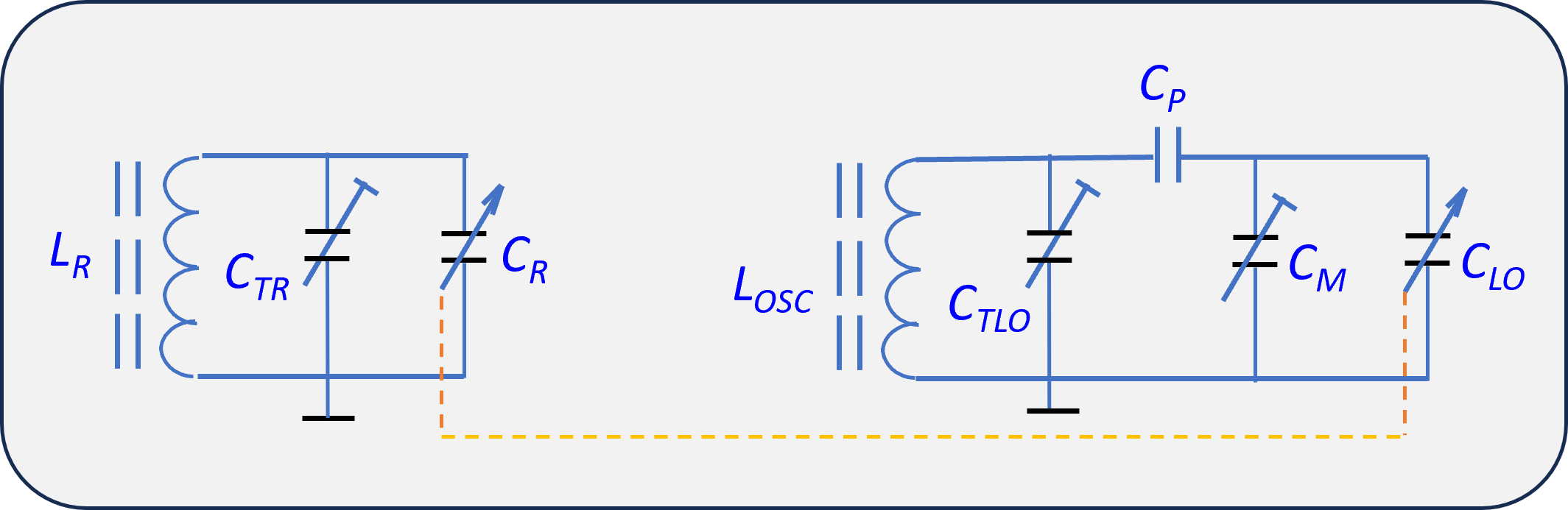
Evolution of Radio Receivers Part 4: Frequency Tracking, Band Switching and Frequency Display
In this Part 4 of our series, we’ll start to explain the necessity of band switching in wide coverage down-conversion superhets. Then we dive into the theory and math of frequency tracking with useful formulas. I will describe the circuit of a representative product to explain why multi-band designs grow surprisingly complex. Whether you’re restoring…
-

Evolution of Radio Receivers Part 3: Build a Classic 6-Transistor Superhet Pocket Radio
In Part 3 of the Evolution of Radio Receivers series, we build and align a classic 6-transistor AM superhet pocket radio. Complete schematic, parts list, construction tips, step-by-step alignment, and real-world listening test results. Perfect hands-on project for electronics hobbyists and students.
-

Evolution of Radio Receivers – Part 2: The Superheterodyne Architecture Explained
In the early days of radio broadcast, performance of receivers were barely adequate. It was until the invention of the Superheterodyne architecture that made high-performance receivers a reality. This post examines the building blocks of a superheterodyne receiver in details, highlighting its advantages and limitations, and explains why it is still the best architecture nowadays.
-
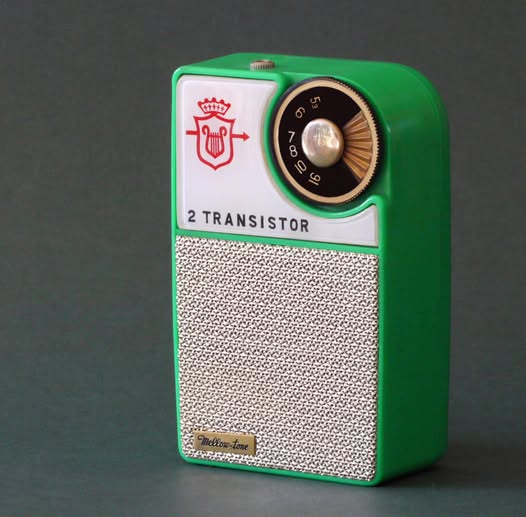
Evolution of Radio Receivers – Part 1: The 2-Transistor Reflex TRF Receiver
In the late 1950, transistor pocket radios emerged. The best performers employed superheterodyne architecture and were expensive. This resulted in another market for lower cost radios using the Tuned Radio Frequency (TRF) architecture which used fewer transistors. Perhaps the most ingenious TRF design was the 2-transistor reflex circuit which had sufficient gain to drive a…
-
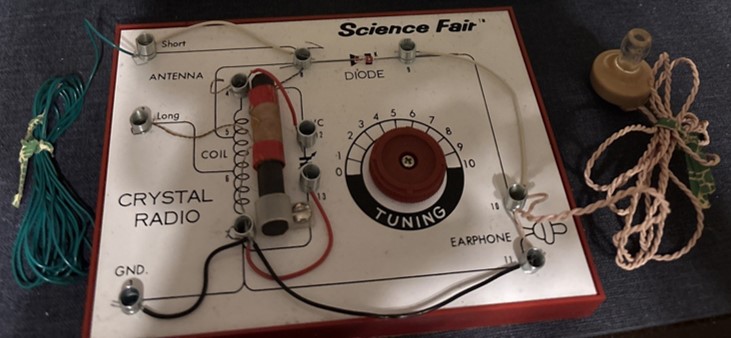
My first radio experiment – Crystal Radio
My first radio project was a crystal radio which was similar to the above picture. As a poor student, the selling price of the kit was too much for me. Fortunately I found a article on building crystal radios from an electronics magazine. I copied the circuit, bought low cost components from the surplus market,…