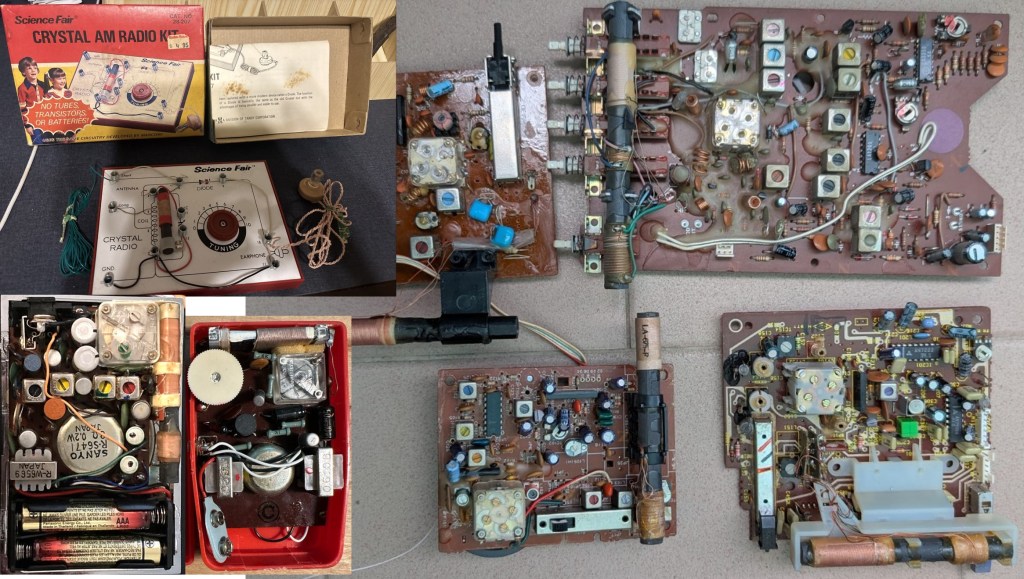
Evolution of Radio Receivers & Transceivers
It is amazing to witness the evolution and progress of the electronics industry for the last 50 years. While present day products are smart and feature-rich, to me the “old and clumsy” products are golden memories. Welcome to my personal journey through 50+ years of radio design. In this ongoing series I revisit circuits I actually built from the early 1970s onward — from simple germanium transistor sets to early IC and PLL designs. Each part includes schematic, build notes, historical context, and performance observations so you can recreate (or improve) them at home. I will also include study notes and circuit descriptions of popular commercial products.
Evolution of Radio Receivers – Part 2: The Superheterodyne Architecture Explained
1. Introduction The first commercial radio broadcast began in the 1920s. In the early days, radio receivers were constructed with an antenna feeding a LC tuned circuit which was followed by a simple crystal detector or a vacuum tube amplifying stage and then a diode detector to recover the audio. This is the basic Tuned…
Keep reading
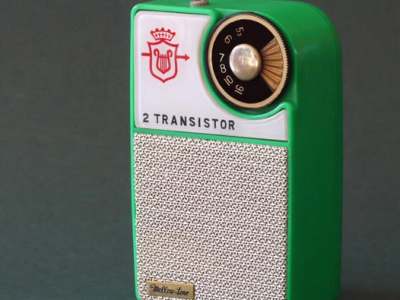
Evolution of Radio Receivers – Part 1: The 2-Transistor Reflex TRF Receiver
Introduction In the mid 1950s, while almost all table-top radios used vacuum tubes, pocket-size transistor radios started to appear. Most of these radios employed the superheterodyne architecture which needed at least 4 transistors for adequate performance. However transistors at that time were very expensive. For cost saving, a few low-end models used the tuned radio…
Keep reading
My first radio experiment
My first radio project was a crystal radio which was similar to the above picture. As a poor student, the selling price of the kit was too much for me. Fortunately I found a article on building crystal radios from an electronics magazine. I copied the circuit, bought low cost components from the surplus market,…
Keep reading
 From Hobby to Professional