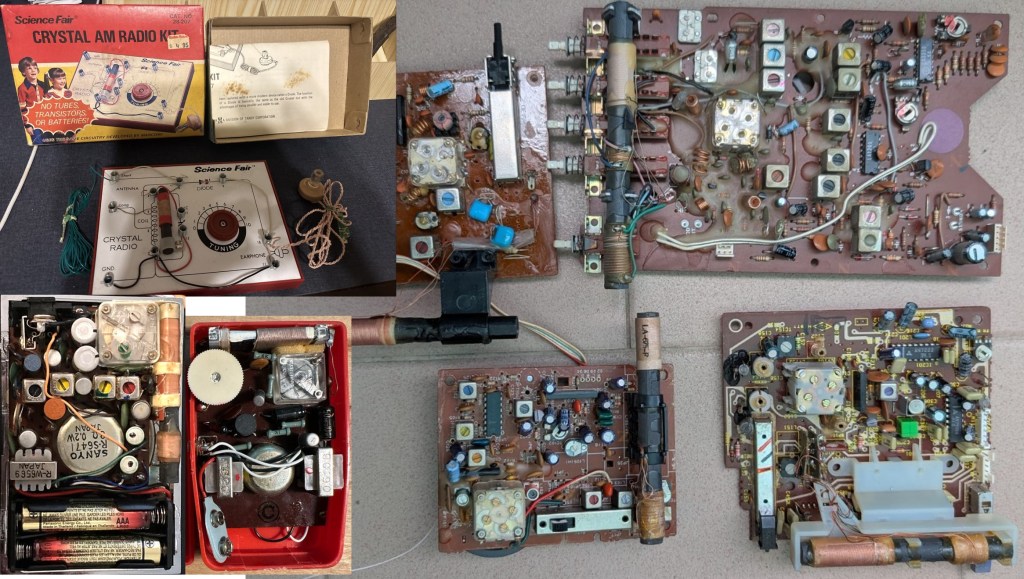
50+ Years of RF & Wireless Evolution: From Hobby to Professional
It is amazing to witness the evolution and progress of the electronics industry over the last 50+ years. While today’s products are smart and feature-rich, to me the “old and clumsy” radios from the past hold the golden memories.
Welcome to my personal journey through five decades of radio design. In this ongoing series, I revisit circuits I actually built from the early 1970s onward — from simple germanium transistor sets to early IC and PLL designs. Each part includes historical context, detailed schematics, construction notes, alignment procedures, and real-world performance observations so you can recreate (or improve) them at home. I will also analyze popular commercial products along the way.
Evolution of Radio Receivers – Series Roadmap
This is a long-term technical series that follows the real historical and technical evolution of radio receivers — from the earliest designs to modern architectures.
- Part 1: Tuned Radio Frequency (TRF) Receivers – Strengths and Limitations (Published)
- Part 2: The Superheterodyne Architecture Explained (Published)
- Part 3: Inside a Classic 6-Transistor AM Pocket Radio (In Progress)
- Part 4: Frequency Tracking and Band Switching
- Part 5: Improving Selectivity – From IFTs to Ceramic & Crystal Filters
- Part 6: Image Rejection and Multiple-Conversion Architectures
- Part 7: Frequency Stability – Wadley Drift Cancellation and PLL Synthesizers
- Part 8: Multi-Band Table-Top and Large Portable Receivers
- Part 9: The FM Era and AM/FM Receivers
- Part 10: High-Performance Communications Receivers
- Part 11: The Integrated Circuit Revolution and Beyond (to SDR)
Bookmark this page to follow the complete journey. New parts will be added regularly.
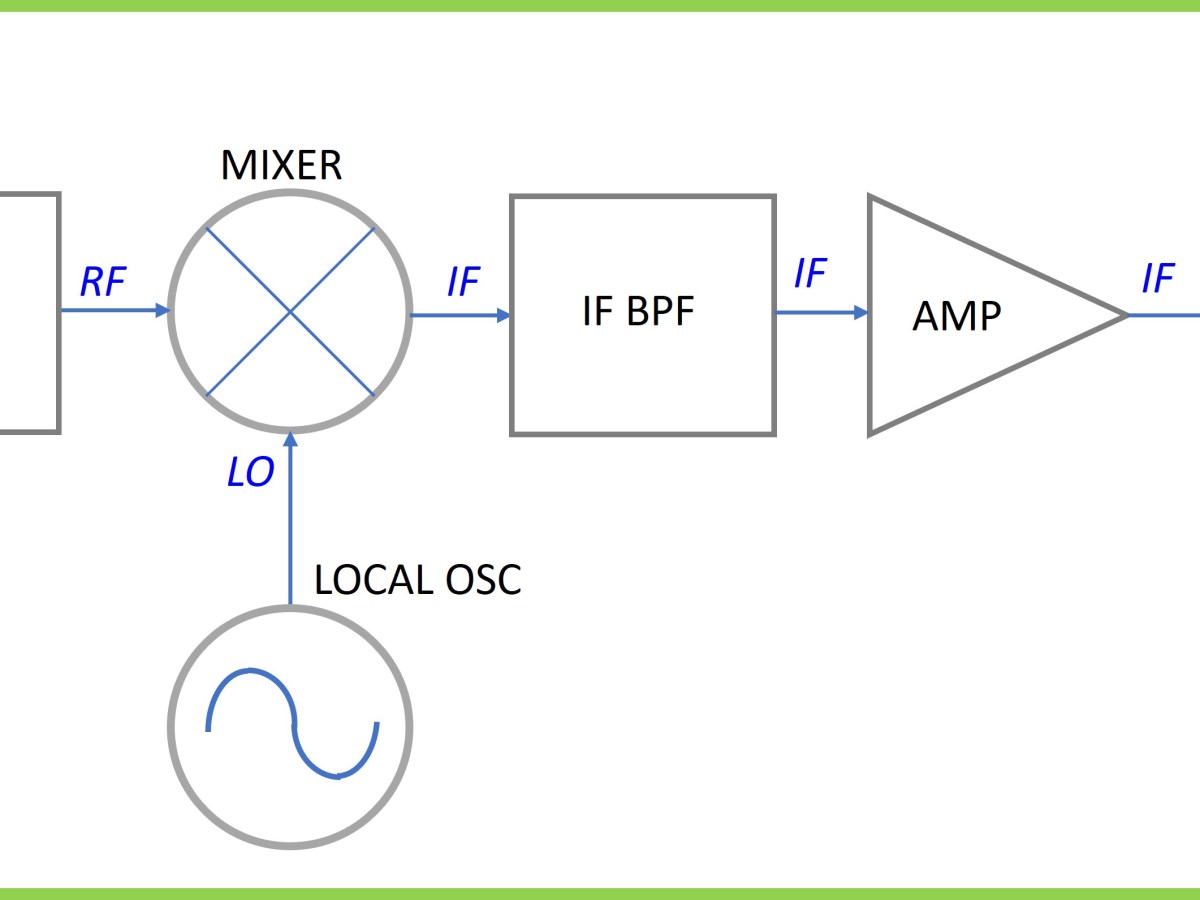
Evolution of Radio Receivers – Part 2: The Superheterodyne Architecture Explained
1. Introduction The first commercial radio broadcast began in the 1920s. In the early days, radio receivers were constructed with an antenna feeding a LC tuned circuit which was followed by a simple crystal detector or a vacuum tube amplifying stage and then a diode detector to recover the audio. This is the basic Tuned…
Keep reading
Evolution of Radio Receivers – Part 1: The 2-Transistor Reflex TRF Receiver
Introduction In the mid 1950s, while almost all table-top radios used vacuum tubes, pocket-size transistor radios started to appear. Most of these radios employed the superheterodyne architecture which needed at least 4 transistors for adequate performance. However transistors at that time were very expensive. For cost saving, a few low-end models used the tuned radio…
Keep reading
My first radio experiment – Crystal Radio
My first radio project was a crystal radio which was similar to the above picture. As a poor student, the selling price of the kit was too much for me. Fortunately I found a article on building crystal radios from an electronics magazine. I copied the circuit, bought low cost components from the surplus market,…
Keep reading
 From Hobby to Professional